? As an Amazon Associate I earn from qualifying purchases. This article contains Amazon affiliate links.
In short :
- Pick a collar that balances comfort, durability, and control.
- Nylon webbing is a sensible choice—it’s light, quick-drying, and tough.
- Check the buckle and hardware; flimsy parts mean it’s time to replace.
- Measure your dog’s neck and prioritise reflective features if you walk near roads at night.
- Treat it as a consumable—swap it out at the first sign of fraying or stiffness.
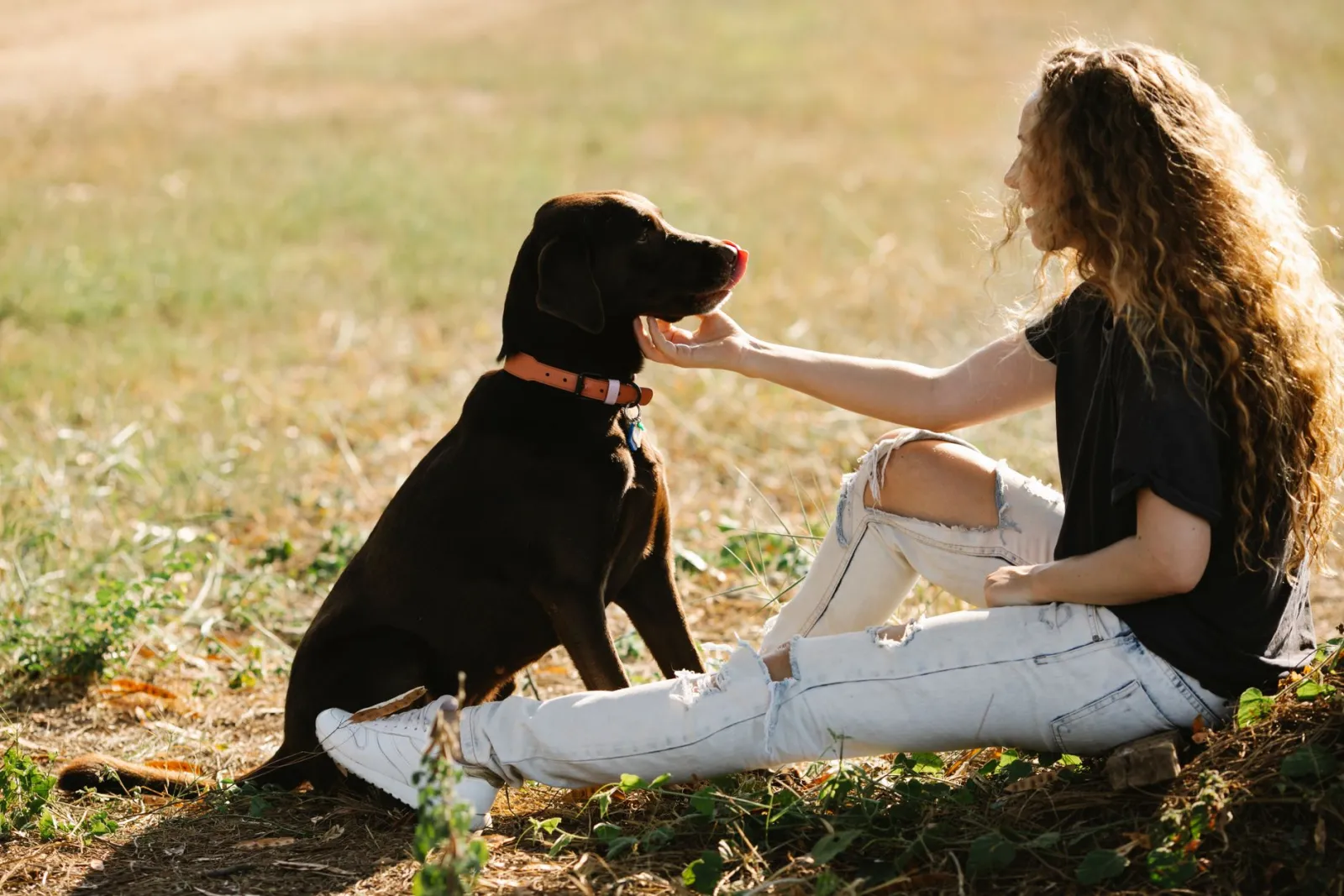
When you bring a dog into your life, the collar is one of the very first accessories you pick up. It holds their ID tags, clips to their lead, and often becomes part of their daily identity. But a collar is not just a fashion statement — it is a piece of safety equipment. Choose the wrong one and you risk chafing, skin irritation, or even a dog that escapes during a walk. Choose right, and it becomes so comfortable your dog hardly notices it is there. A wide range of collars exists, from basic everyday nylon straps to heavy-duty training options, and understanding the differences helps you make the right choice without wasting time and money.
A good collar should balance comfort, durability, and control. It needs to survive muddy walks, rain, and the occasional enthusiastic roll in the grass. It also has to be safe — the fit has to be spot on, and the material needs to breathe. This review is not about any specific brand or model, but rather about the product category as a whole. Collars wear out over time, whether on energetic retrievers or stubborn terriers, and it is worth knowing exactly what separates a keeper from a disappointment. If you are in the market, you can [whg_go] to see the options for yourself.
Key Features to Look For
Material and Construction
The material is everything. Nylon webbing is the most common choice because it is lightweight, quick-drying, and available in endless colours. It is also easy to wash — just throw it in the sink or under a tap. Leather collars are heavier and take time to break in, but they age beautifully and look smarter for formal settings. Biothane and rubber-coated options are gaining popularity because they wipe clean easily and are fully waterproof. Whatever the material, check the stitching: reinforced double stitching at stress points, especially around the buckle and the D-ring, matters more than any fancy logo.
Buckle and Hardware
Plastic side-release buckles are the standard for everyday collars. They are light, quiet, and easy to undo even with cold hands. However, they can crack in very cold weather or under serious pulling. Metal buckles and clasps are more secure for strong dogs, but they add weight and can be noisy if a dangling tag taps against them. Consider your dog’s habits — a dog that rubs its neck along fences will test any buckle. The D-ring, where you attach your lead, should be solid and ideally welded rather than bent wire.
Size Range and Adjustability
Collars generally come in sizes from extra-small (for puppies and toy breeds) up to extra-large (for giant breeds). A good collar offers several inches of adjustment within its size bracket, so you can get a precise fit. Measure your dog’s neck with a soft tape measure and leave room for two fingers to slip comfortably between the collar and the neck. Remember that some breeds, like sighthounds, have necks wider than their heads — a collar that slips off over the head is a real risk for those dogs.
Reflectivity and Visibility
If you walk your dog early in the morning or after dark, reflective stitching or a reflective strip is non-negotiable. Some collars now feature light-up elements, which are brilliant for winter months. Even a mildly reflective strip can be the difference between a driver seeing you and not seeing you. It is fair to say that reflectivity is not just a bonus feature — it is a core safety requirement for any collar used outside.
The Pros: What a Good Collar Does Right
1. All-Day Comfort Without Chafing
The best collars simply disappear after ten minutes of wear. Soft yet sturdy materials like padded nylon or supple leather spread pressure evenly around the neck. In practice, a properly padded collar makes a noticeable difference on dogs with sensitive skin or thin coats. There is no rubbing on the throat, no lost fur on the underside of the neck, and no constant scratching. A well-designed collar should not leave indentations or red marks even after a full day of wear between walks.
2. Reliability in Everyday Situations
A great collar delivers a reassuring “click” when it buckles and stays put. It survives the pulling of an excited dog at the sight of a squirrel and does not loosen on its own over time. Generally speaking, the good ones come off only when you want them to come off. This reliability is also about the hardware: a rounded, smoothly finished D-ring does not scrape your finger when you clip on the lead, and it sits at the back of the neck without sliding around constantly.
3. Low Maintenance and Easy to Clean
Dogs find dirt effortlessly. The collars that stand out are the ones that clean up quickly. A nylon collar can be machine-washed in a pillowcase on a gentle cycle; a biothane collar wipes down with a damp cloth and looks new again. Leather needs a bit of care, but a good conditioner keeps it supple for years. The biggest frustration is a collar that absorbs odours and never rinses clean — thankfully, quality options solve this with sealed webbing or waterproof coatings.
4. Safety Features That Add Peace of Mind
The modern collar does more than hold ID tags. Quick-release “snap” mechanisms help in emergencies, and breakaway designs exist for cats and smaller dogs who might get snagged on branches. For dogs who pull heavily, a martingale-style collar offers gentle correction without choking — it is a sensible middle ground between a flat collar and a choke chain. Reflective features add another layer of confidence when you are walking along a road at dusk. You can compare different safety-style collars by searching [whg_go] to see which design matches your dog’s needs.
5. Personalisation Without the Fluff
While gimmicks are best avoided, collars with an engraved nameplate or robust ID loop are genuinely useful. Having your phone number on the collar itself gives you one more safety net if the separate ID tag falls off. Engraved plates generally stay legible for a long time, even after muddy hikes and beach days. Just be careful to choose a plate that is firmly stitched or riveted — the glued ones can peel off in the washing machine.
The Cons: Where Collars Fall Short
1. Pressure on the Neck Can Be Risky
To be honest: no flat collar is perfect for a strong puller. Repeated strain on the neck can aggravate the trachea and cervical spine, especially in small breeds and dogs prone to breathing issues. Even a well-fitting collar should never be your go-to tool for training a dog that lunges. For those dogs, a harness distributing pressure across the chest is a wiser choice. A collar is still essential for ID tags, but you may be better off walking on a harness and using the collar mainly as a “tag holder.”
2. Durability Issues with Cheap Items
When you spend very little, the consequences become clear within months. Cheap webbing frays at the edges, the buckle develops a hairline crack, and the D-ring starts to bend under load. The stitching is often the first thing to go, and once a seam opens near the buckle, the collar is a liability. The frustrating part is that a failing collar rarely announces itself — it just quietly weakens until the day it gives way. Inspecting the stitching and hardware every few weeks is the simplest way to catch this early.
3. Fit Problems Are Common
A collar that is too loose slides down and can be slipped out of with a quick backward pull; one that is too tight presses on the throat and rubs the coat away. Many owners buy a collar once and never re-check the fit, even though neck size changes with weight, coat growth, and age. Puppies in particular outgrow a collar within weeks. The two-finger rule is a good starting point, but it should be re-tested regularly, not just on the day of purchase.
4. Not Ideal for Every Situation
A collar is a poor choice for tying a dog out, for long hikes where a dog may need to be lifted over obstacles, or for dogs that panic and back out of restraints. In those moments, a harness or a well-fitted head collar is safer. Recognising when a collar is the wrong tool is part of responsible ownership — it is not a failure of the collar, just a mismatch of purpose.
How to Choose: A Practical Checklist
- Measure first. Use a soft tape around the middle of the neck, then add room for two fingers. Write the number down before you shop.
- Match material to lifestyle. Swimmers and mud-lovers do best with nylon or waterproof-coated webbing; city dogs and show dogs may suit leather.
- Check the hardware by hand. Squeeze the buckle, tug the D-ring, and look for welded construction rather than bent wire.
- Prioritise visibility. If any part of your walk happens in low light, choose reflective stitching or a reflective strip.
- Consider a nameplate. An engraved plate stitched or riveted to the collar is a durable backup to a hanging tag.
- Think about your dog’s pulling style. If your dog lunges, plan to walk on a harness and keep the collar for identification.
Les erreurs à éviter
Most collar problems are not caused by bad luck. They come from a handful of predictable mistakes that owners make again and again. Here are the ones worth sidestepping from day one.
1. Buying for looks before fit.
It is tempting to grab the collar that matches your dog’s coat or your own aesthetic. But a collar that is half an inch too tight will rub, and one that is too loose will slip. The fix is simple: measure the neck properly, note the number, and only then start comparing designs. If a collar you love does not come in the right size, walk away — there is always another one.
2. Leaving the collar on 24/7 without checking it.
Many owners put a collar on a puppy and forget about it. Over weeks, the webbing stretches, the buckle loosens, and the fit drifts. Worse, a collar left on during rough play or in a crate can snag on a bar or a branch. A good habit is to remove the collar at night or during crate time, and to run a quick fit check every week or two. It takes ten seconds and prevents most accidents.
3. Ignoring the first signs of wear.
A slightly frayed edge or a stiff patch near the buckle is easy to overlook. But once the outer weave of webbing starts to separate, the load-bearing core is exposed and the collar is on borrowed time. The same goes for a buckle that has become stiff or a D-ring that has started to rotate loosely. Replace at the first sign, not the second — a collar is cheap compared to a lost dog.
4. Using a flat collar as a training tool.
A flat collar is for identification and for walking a dog that already walks politely. It is not a correction device. Using it to check a strong puller puts pressure directly on the throat and can cause real harm over time. If your dog pulls, invest the effort in loose-lead training or switch to a harness — the collar stays on for tags, not for control.
5. Forgetting the tags and the backup ID.
A collar without a tag is just a strap. Make sure the ID tag is legible, the phone number is current, and the ring holding it is not worn thin. Adding an engraved nameplate directly to the collar gives you a second layer of identification if the hanging tag is lost. Microchips are essential too, but they only work if the registry details are up to date — check them at the same time you check the collar.
6. Washing the collar with the hardware attached, then forgetting to dry it.
Washing is good; washing and then leaving the collar damp in a bag is not. Moisture trapped in webbing encourages odour and mildew, and it can corrode metal parts over time. After washing, hang the collar to dry fully, ideally in the sun, and wipe metal hardware with a dry cloth. A collar that smells sour is usually a collar that was never properly dried.
Entretien, durée de vie et moment de remplacement
A collar is a wear item, not a permanent fixture. How long it lasts depends far more on how it is used and cared for than on any single feature. A dog that swims daily in salt water will go through collars faster than a dog that does two short pavement walks a day. Understanding the maintenance routine and the replacement signals helps you get the most out of each collar and know when to let it go.
Routine maintenance
Weekly checks are the backbone of collar care. Run your fingers along the full length of the webbing and feel for fraying, stiffness, or thin spots. Flex the buckle to check it still snaps crisply, and give the D-ring a firm tug to confirm it is not bending or rotating loosely. Look at the stitching around the buckle and the D-ring — this is where failure usually begins. If a seam is opening, the collar is done.
Cleaning should match the material. Nylon and waterproof-coated webbing can be hand-washed with a mild soap and warm water, or machine-washed inside a pillowcase on a gentle cycle. Rinse thoroughly, because soap residue left in the weave can irritate skin. Leather should never be soaked; wipe it with a damp cloth and treat it occasionally with a leather conditioner to keep it supple and prevent cracking. Metal hardware benefits from a wipe-down and a light dry after any exposure to water, especially salt water.
Drying matters as much as washing. Hang the collar open, in the shade or sun, until it is completely dry — including inside the buckle and around the D-ring. Never store a damp collar in a closed bag or drawer.
Expected lifespan in real use
There is no single number that applies to every collar, because the variables are too wide. What matters is the pattern: collars used daily, exposed to water, mud, and sun, and worn by a dog that pulls will age faster than a collar used occasionally on a calm walker. Sunlight degrades webbing over time, salt water attacks metal, and constant tension at the D-ring works the stitching loose. As a rule of thumb, expect a well-made everyday collar to serve for a good while with basic care, and expect a cheap one to show its limits much sooner. The material and hardware quality you choose at purchase is the biggest single factor in how long it lasts.
When to replace
Replace the collar immediately if you notice any of the following:
- Fraying, thinning, or a broken weave anywhere along the webbing.
- Stitching that has come loose or pulled away near the buckle or D-ring.
- A buckle that no longer clicks firmly, feels brittle, or has visible cracks.
- A D-ring that is bent, rusted, or rotates loosely in its mount.
- Stiff, cracked, or peeling leather that no longer flexes.
- Persistent odour that returns after washing.
- A fit that can no longer be adjusted correctly, or a collar that has stretched out of shape.
Do not wait for a collar to fail during a walk. If any of these signs appear, retire it — a spare collar kept in a drawer makes the swap instant and stress-free. For puppies, expect to size up as they grow, and keep the old collar as a backup rather than passing it on if it shows any wear.
FAQ
How tight should a dog collar be?
You should be able to slide two fingers comfortably between the collar and the neck. Any tighter and it will rub; any looser and your dog may back out of it.
Is nylon or leather better?
Neither is universally better. Nylon is lighter, cheaper to maintain, and dries fast — ideal for active, muddy dogs. Leather is heavier and needs care, but it ages well and suits dogs that mostly walk on pavement.
Should my dog wear a collar at night?
Many owners remove the collar at night or during crate time to reduce snagging risk. If your dog sleeps loose in the house and you want the ID on at all times, make sure the fit is correct and the collar has no dangling parts that can catch.
Can a collar hurt my dog’s neck?
A flat collar used for identification is generally fine. Problems arise when a collar is used to control a dog that pulls hard, which puts repeated pressure on the throat. For those dogs, walk on a harness.
How often should I check the collar?
A quick fit and wear check once a week is a good habit, plus a closer inspection after any swim, hike, or muddy walk.
What is a martingale collar for?
A martingale has a second loop that tightens slightly when the dog pulls, which helps prevent slipping out — useful for narrow-headed breeds. It should never tighten enough to choke.
The Bottom Line
A collar is one of the smallest purchases you will make for your dog, and one of the most important. Get the fit right, choose a material that suits your routine, and check the hardware before you commit. Then treat it as what it is: a wear item that deserves a weekly glance and a prompt replacement when it starts to show its age. Do that, and the collar becomes exactly what it should be — a quiet, reliable piece of everyday safety that your dog forgets about within minutes. If you are ready to compare options, you can [whg_go] to browse the current selection.
Sources
- American Kennel Club (AKC) — guidance on collar fit, identification, and safe walking equipment.
- The Kennel Club — advice on collar and lead safety and responsible dog ownership.
- RSPCA — welfare guidance on restraint, walking equipment, and dog comfort.
- PDSA — pet health information on collar fitting and skin irritation prevention.